Egyptian chamomile (Matricaria chamomilla) is traded in four main grades. The right one depends on how you use it: whole flowers for loose tea, TBC for tea bags, siftings for extraction, and powder for capsules and cosmetics.
The four commercial grades
| Grade | What it is | Typical use |
|---|---|---|
| Whole flowers | Intact dried flower heads, cleaned of stems and leaves | Premium loose tea, retail packs, oil infusion |
| TBC (tea-bag cut) | Flower heads cut and sieved to a narrow size, typically 0.5–2 mm | Filter bags and pyramid bags on automatic packing lines |
| Siftings | The finer fraction separated during sieving: petals, receptacle pieces and fines | Extraction, blends, lower-cost tea bags |
| Powder | Milled flower heads | Capsules, cosmetics, instant blends |
A whole-flower grade looks best in a retail pack, but it is bulky and does not run on tea-bag machines. TBC is the workhorse grade for tea packers because its narrow size range keeps bag weights consistent. Siftings are cheaper and perfectly suitable when the flowers will be extracted or blended and appearance does not matter.
What to put in your specification
- Cut size and sieve range – for TBC, state the minimum and maximum (for example 0.5–2 mm) and the allowed dust fraction.
- Moisture, total ash and acid-insoluble ash – ONIC’s archive reference specification for chamomile TBC is moisture below 12%, total ash below 10% and acid-insoluble ash below 1%. Acid-insoluble ash is the best quick indicator of sand and soil.
- Purity / foreign matter – stems, leaves and other plant parts; the reference purity is 99%.
- Colour and aroma – bright yellow centres and white ligules with a clean, apple-like smell. Brown flowers usually mean late harvest, slow drying or old stock.
- Shelf life – the reference shelf life for chamomile TBC is 36 months in proper storage.
These values are reference limits, not batch results. Always ask for the certificate of analysis (COA) of the lot you are buying – see how to read a herb COA.
When to buy: harvest and new crop
In Egypt chamomile is harvested from January to March, mainly in Fayoum and Beni Suef. The best time to agree new-crop prices and volumes is one to two months before harvest, i.e. November–December. Stored stock is usually available through the rest of the year. The Egyptian crop calendar shows all harvest windows.
EU and UK checks to plan for
Chamomile sold as a herbal infusion in the EU must respect the maximum level for pyrrolizidine alkaloids of 400 µg/kg (dried product) set for chamomile, peppermint, lemon balm and a few other herbs (Regulation (EU) 2020/2040, now in Regulation (EU) 2023/915). Pesticide residues must comply with Regulation (EC) No 396/2005. Agree with your supplier which of these tests are done before shipment and by which laboratory.
How ONIC supplies chamomile
ONIC exports whole flowers, petals, TBC and powder, packed in 12 kg cartons to protect the flower heads. See the chamomile product page for the current reference specification, or request a quotation and sample.
Products in this guide
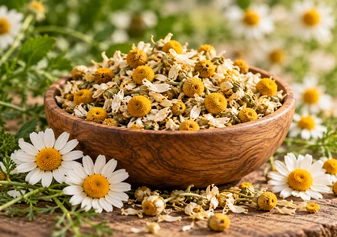 Chamomile
Quick answers
What is the difference between chamomile TBC and siftings?
TBC is cut and sieved to a defined size range (typically 0.5–2 mm) for tea bags. Siftings are the finer fraction removed during sieving; they are cheaper and suited to extraction and blends.
When is Egyptian chamomile harvested?
From January to March, mainly in Fayoum and Beni Suef. New-crop volumes are best contracted in November–December.
Source from ONIC
Send your specification, quantity and destination port – we reply with a quotation and can send samples.